How to Break In New Sandals Without Blisters
New sandals should not cost you a week of sore feet. The trick is not toughness — it is timing: different footbeds soften in different ways, and the most comfortable pairs are usually the ones given a gentle first fortnight.
Last updated: 30 October 2026The short answer
Wear new sandals for short periods first — around the house, then quick trips — and build up gradually over several days. Cork footbeds need the longest runway: Bstore’s guidance says a cork footbed can take up to about two weeks to fully mould to your foot, and it may feel odd at first. Leather straps start snug and ease over the first few wears, moulded foam adjusts more quickly, and EVA styles need little more than a fit check. At the first hot spot, stop, adjust the strap, and give your feet a break — pushing through is how blisters happen.
The break-in timeline, step by step
This is the gradual build-up that works for almost every sandal style — cork classics, leather flats and foam slides alike. If a pair still rubs at the end of week two, the fit is the problem, not your patience.
House shoes only
Put the new pair on at home for short spells — making dinner, pottering about — on clean floors. This is your strap-adjustment window: buckle leather straps so the foot sits centred on the footbed, not sliding forward, and check that no strap edge lands exactly on a toe joint or ankle bone. Cork footbeds will feel firm and flat at this stage; that is normal.
Short trips out
Graduate to quick errands — the corner shop, a short school run — and keep a backup pair handy if you can. Leather straps typically begin to ease across these wears; Bstore notes snug leather (like Big Buckle styles) stretches over the first 2–4 wears. Foam arch-support slides also start to feel less noticeable as the foam moulds to your foot shape.
Half days, then full days
Build toward a few hours at a time. This is the home stretch for cork: with every wear the cork-latex footbed softens and moulds to the shape of your foot, the heel cup and arch support start to feel made for you, and the “slightly painful” early stage Bstore warns about should be fading. If one exact spot still rubs, see the hot-spot section below before the next outing.
Full wear — with the care rules locked in
Your sandals are now broken in, and the job becomes keeping them that way: keep cork away from water, keep every style out of a hot car, and clean each material the way its maker intends (details below). Well-kept cork pairs reward this — most components are replaceable or repairable, so they can be resoled rather than replaced.
Why new sandals rub in the first place
A new sandal is two stiff things meeting a soft one. The straps have not yet learned the shape of your foot, the footbed has not yet taken your imprint, and the skin on your heels and toes has spent months inside shoes. Every break-in is really three small adjustments happening at once: the upper relaxes, the footbed moulds, and you learn where the sandal wants to sit. That is why the exact same pair can feel harsh on day one and effortless a fortnight later — and why our best sandals in Australia guide scores footbed design as heavily as looks.
It also explains the most useful rule: rubbing is information. A strap that leaves a red line after twenty minutes at home is telling you where it will blister on a two-hour beach walk — short early wears let you hear that message while it is still cheap to fix.
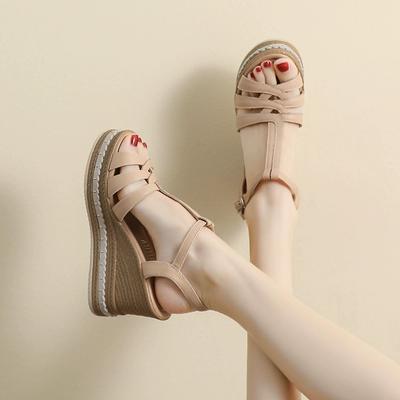
Short, regular wears beat one heroic long walk every time.
Every material breaks in differently
Cork-latex footbeds: the two-week mould
Classic cork sandals — the Birkenstock Arizona Classic is the template — start firm and unyielding because natural cork and latex has not yet compressed around your foot. Bstore’s guidance is that the footbed softens and moulds to the shape of your foot with every wear, and it can take up to about two weeks to fully mould; it may feel odd, or even slightly painful, at first. That is a genuine break-in, not a fault. The non-negotiable rule for cork: keep it dry. Birkenstock Australia’s care instructions say plainly, “Don’t immerse cork models in water” — water can damage cork-based footwear and dissolve the glue and sealant. Cork pairs are dry-weather shoes; for the beach, choose a water design instead.
Leather straps and leather footbeds: snug, then supple
Leather uppers start their life holding the shape of the box, not your foot. Oiled leather is made for a relaxed, lived-in feel, but Bstore notes even it begins snug and stretches over the first 2–4 wears. Fully leather-lined dressier styles — the FRANKIE4 Anya, with its 100% leather upper, lining and footbed cover over a podiatrist-designed LuxaLite® footbed — have less to mould underneath (the contoured footbed is already shaped) but still need the straps to ease. Leather care from the same brand: apply waterproofing spray before first wear and spot-clean with a damp cloth only; leather sandals are not water sandals.
Moulded EVA and foam: the quick adjusters
One-piece EVA sandals, like the Birkenstock Arizona EVA, arrive with their footbed already moulded — deep heel cup, arch supports and toe grip are built in — so there is no two-week wait; break-in is mostly confirming the fit and strap position. What EVA gives you instead is water freedom: Birkenstock describes the material as water-resistant, and Bstore describes EVA Birkenstocks as lightweight, waterproof and shock-absorbent, made for beach and pool wear. Foam arch-support slides (Archies is the local example) sit in between: Bstore states an adjustment period is normal — the high arch is noticeable straight away and the fit feels snug at first — because the foam gradually moulds to your individual foot shape with wear.
The materials table: break-in behaviour and care rules
| Footbed / upper material | Break-in behaviour | Care rule (as researched) |
|---|---|---|
| Cork-latex footbed (Birkenstock Classic) | Slowest — softens and moulds with every wear; up to ~2 weeks to fully mould (Bstore) | Never immerse in water — it damages cork and dissolves glue/sealant; avoid extreme heat |
| Oiled / smooth leather straps | Starts snug, stretches over the first 2–4 wears | Waterproofing spray before first wear (leather dress styles); spot-clean with a damp cloth |
| Moulded EVA (Arizona EVA) | Minimal — footbed is pre-moulded; fit check only | Water-resistant/waterproof — hose-off wear is fine; still avoid extreme heat and hot cars |
| Arch-support foam (Archies slides) | Adjustment period — arch feels noticeable and snug at first, then moulds to your foot shape | Waterproof foam; do not leave in direct sun or high heat for long (can soften, warp or shrink) |
| Quick-dry textile straps (Teva) | Little break-in; hook-and-loop straps adjust instantly | Quick-dry by design — made to play well with water; rinse and air-dry |
Strap adjustment: the five-minute fix most people skip
More “break-in pain” is bad adjustment than bad sandals. Work through it once, slowly: fasten every strap while standing, so your foot is at full width; leave enough room that the foot does not spill over the footbed edge, but not so much that the sandal slaps and your toes grip to hold it on — Bstore notes that a secure strap fit is exactly why toes do not need to grip on a well-fitted slide. On two-strap cork styles, let snug leather stretch over the first few wears rather than punching extra holes on day one. If a buckle lands on a bone, a half-step tighter or looser usually moves the pressure point more than any padding will.

Five minutes with the buckles on day one saves the whole break-in.
At the first hot spot: stop, adjust, rest
A hot spot — that warm, tender patch of skin mid-walk — is a blister introducing itself. The general footwear-care response is boring and effective:
- Stop and adjust first. Loosen or tighten the nearest strap; a millimetre of movement relocates the rub.
- Cover the spot. A plaster or a small piece of tape over the area lets you finish the walk without the skin taking the friction.
- Shorten the session. Swap to a worn-in pair and let the tender skin calm down before the new sandals go on again — tomorrow, not this afternoon.
- Change one thing at a time. If the same spot complains on three separate wears despite adjustment, the strap placement and your foot simply disagree, and no amount of breaking in will rewrite that.
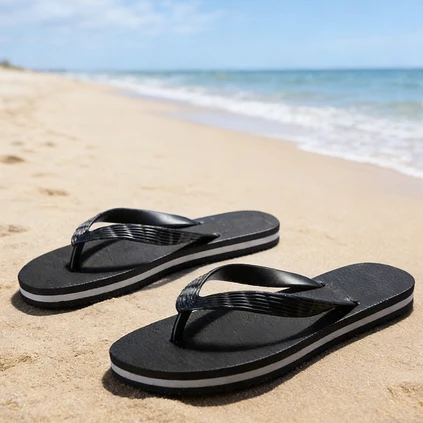
This is also why thongs and slides deserve the same respect as strappy sandals: our best thongs guide covers the arch-support designs that reduce the toe-gripping and sliding that cause most flip-flop rubbing.
Care rules that keep a broken-in pair alive
Breaking in is an investment; care is how you collect on it. Three maker-stated rules cover most of this summer’s pairs. First, heat: Birkenstock Australia warns against extreme heat for both its cork and EVA lines — do not leave sandals in a hot car or baking in direct sun — and Bstore gives the same warning for foam slides, which can soften, warp or shrink. A shaded, ventilated spot at home is the whole storage system. Second, water discipline: cork never gets immersed, leather gets sprayed and spot-cleaned, and only the genuinely water-built styles (EVA, waterproof foam, quick-dry textile straps) go in the surf and the shower — if you are building a beach rotation, our summer dress guide readers pair them with the same dry-versus-water logic for fabrics. Third, sweat and sand: a quick rinse for water-safe styles and a dry brush-off for the rest keeps grit from grinding away at straps and footbeds between wears.
Do that, and the pair that felt like a mistake in week one becomes the pair you reach for without thinking.
Sandal break-in questions, answered
How long does it take to break in cork sandals?
Give cork footbeds up to about two weeks of regular wear. Bstore’s guidance is that a cork-latex footbed softens and moulds to the shape of your foot with every wear, and it can feel odd — even slightly painful — at first. Short daily wears get you through that stage faster and more comfortably than one long walk. That gradual routine is the most comfortable way to learn how to break in sandals without rushing the footbed.
Can I soften cork sandals by wearing them in water?
No — keep cork out of water entirely. Birkenstock Australia’s care instructions say “Don’t immerse cork models in water”, because water can damage cork-based footwear and dissolve the glue and sealant. If you need a sandal for the beach or pool, choose a moulded EVA or waterproof foam style instead. That water rule is worth remembering whenever you are learning how to break in sandals with cork footbeds.
Do EVA sandals need breaking in?
Hardly at all. One-piece EVA sandals like the Birkenstock Arizona EVA arrive with the footbed already moulded — deep heel cup, arch supports and toe grip are built in — so break-in is mostly a fit and strap-position check across your first few wears. They are also the water-friendly option: the material is water-resistant and made for beach and pool use. Even with a pre-moulded footbed, a few short wears are still the sensible way to learn how to break in sandals of any material.
Why do my new leather sandals feel so tight?
Leather straps start snug because they are still holding the shape of the last, not your foot. Bstore notes that snug leather stretches over the first 2–4 wears, so adjust the buckles while standing, wear the pair in short sessions, and let the leather ease before deciding the fit is wrong. Patience pays off here, because learning how to break in sandals with leather straps is really about letting the material ease to your foot.
What should I do when I feel a hot spot on my foot?
Treat a hot spot as a blister warning and act straight away: stop, adjust the nearest strap to move the rub, and cover the tender skin with a plaster or tape. Then swap to a worn-in pair and rest the spot until the next day. If the same place complains on three separate wears despite adjustment, the strap placement and your foot disagree — no break-in will fix that. Catching rub early is the most important part of learning how to break in sandals without blisters.
How should I store sandals through an Australian summer?
Keep them out of extreme heat. Birkenstock Australia warns against leaving sandals in a hot car or direct sunlight for both its cork and EVA lines, and Bstore warns that foam slides left in high heat can soften, warp or shrink. A shaded, ventilated spot indoors is all the storage system they need. Good storage is part of the long game too, so once you know how to break in sandals, keeping them out of extreme heat helps the broken-in fit last.
Related guides: Best Sandals in Australia · Best Thongs in Australia · Best Summer Dresses in Australia. Browse all categories on the homepage.
Affiliate disclosure: Best Aussie Wear is a participant in the Amazon Australia affiliate program. As an Amazon Associate, we earn from qualifying purchases — at no extra cost to you. Prices on Amazon change; the price you pay is the price shown on Amazon at checkout. Read our full Affiliate Disclosure.