Carry-On Backpack Size Guide: Australian Cabin Limits Explained
Your backpack’s product page says “carry-on approved”. The sizer at the gate may disagree. This guide explains how Australian cabin limits are measured, which dimension catches travellers out, and how to check your pack at home — before the airport checks it for you.
Last updated: 30 October 2026The short answer
For Australian domestic flights, work to a packed size of 56 × 36 × 23 cm (height × width × depth) — the main cabin-bag allowance tabulated for Qantas, Virgin Australia and Jetstar in Samsonite Australia’s cabin-fit checker. Measure your backpack packed, at its widest points, straps and handles included. And check the width first: height rarely breaks the rules, but plenty of popular packs are 37–38 cm wide against a 36 cm limit. Our tested shortlist is in the best backpack Australia guide.
How airlines measure a cabin bag
A cabin limit is three numbers — height × width × depth — and your bag has to fit all three at once, the way it will actually travel: packed, zipped and closed. Gate staff use a metal sizer frame, and a bag either slides in or it doesn’t. That means the measurement that counts is not the neat figure on a swing tag; it’s the outermost points of the loaded bag.
What counts toward the measurement
Everything attached to the bag counts: padded shoulder straps that stick out sideways, a top grab handle, compression straps left loose, a bulging front pocket, and anything strapped to the outside. Wheels and extendable handles count on rolling luggage; on a backpack, the equivalents are the harness, hip belt and stuffed side pockets. A drink bottle in the side pocket can quietly add a centimetre or two to your width or depth — exactly the centimetres that matter.
Weight counts too. In the allowances tabulated by Samsonite Australia’s cabin-fit checker when we checked in late October 2026, the main cabin bag limit was the same physical size on all three big domestic airlines, with weight the main difference:
The three dimensions, explained
Height — rarely the problem
Height is measured from the base of the bag to the top of the closed main body. Most daypacks and work backpacks stand 42–53 cm tall, comfortably under 56 cm. Height only bites on dedicated travel packs: the Kathmandu Transfer 28L, for example, was measured at roughly 59 cm tall in review testing — a road-trip size that has to be under-packed before it can fly as cabin baggage.
Width — the dimension that trips people up
Width is where good packs fail. Work and laptop backpacks are built wide to swallow a 16-inch laptop flat, and listed widths of 34–38 cm are common. The clearest case in our research: the Bellroy Transit Workpack 26L is listed at 530 × 380 × 160 mm — that’s 53 × 38 × 16 cm, so its width is 38 cm against a 36 cm cabin limit. Two centimetres over, on a pack marketed for work trips and short flights. Nobody notices, because height and depth look fine and the bag “feels” cabin-sized.
Depth — the quiet third number
Depth is front-to-back thickness, and it grows as you pack. A lightly loaded daypack might measure 16 cm deep; the same pack stuffed for a weekend can bow out well past 20 cm. The Osprey Daylite Plus is listed at 48 × 28 × 24 cm — its 24 cm depth is already 1 cm over the tabulated 23 cm before you’ve overfilled it. Depth is the dimension most in your control: pack flatter, and you buy those centimetres back.
How to measure your own pack at home
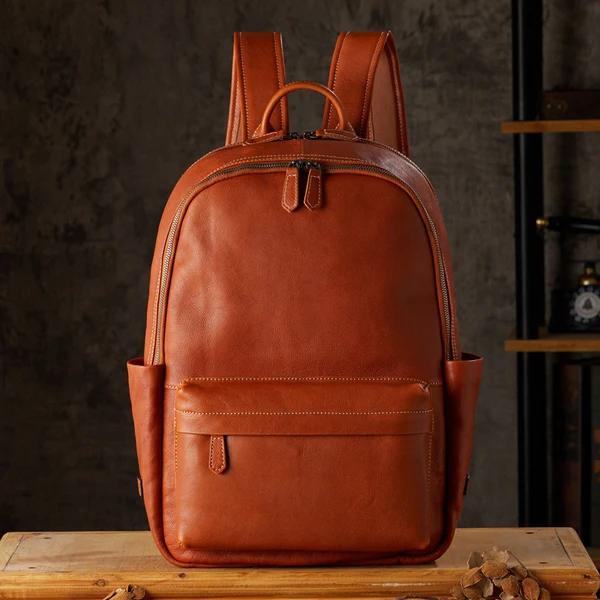
You need a tape measure, a hard floor and five minutes. Pack the bag the way you’ll actually travel with it — laptop in, jumper in, toiletries in — because an empty bag always measures smaller than the one you carry to the gate.
Stand it on the floor against a wall and measure height from floor to the highest point of the closed bag, not the carry handle loop pulled up. Turn it sideways and measure width across the widest point, including padded straps if they flare out. Then measure depth from the back panel to the furthest bulge of the front pocket. Weigh it on bathroom scales while you’re at it — a 1.0 kg empty pack leaves you 6 kg of the 7 kg Qantas and Jetstar allowance for everything inside it.
The measure-your-pack checklist
- Pack the bag exactly as you’ll fly with it — laptop, clothes, toiletries, charger.
- Height: floor to the top of the closed bag, against a wall. Limit: 56 cm.
- Width: across the widest point, straps and side pockets included. Limit: 36 cm — check this one twice.
- Depth: back panel to the front bulge. Limit: 23 cm.
- Tighten every compression strap, then measure again — the second number is the honest one.
- Weigh the packed bag: 7 kg (Qantas/Jetstar) or 8 kg (Virgin Australia) in the tabulated allowances.
- Re-check your airline’s page before flying — allowances change, and fares differ.
Soft shells, hard shells and the compression question
Backpacks are soft by design, and that’s their quiet advantage: a soft pack can squeeze. A listed size is measured on an empty or lightly filled bag, so a soft backpack that’s 1–2 cm over on one dimension will often still compress into a sizer — drop in softer contents, tighten the compression straps, and the bulge flattens. Structured and hard-shell bags can’t do that trick: what they measure is what they are, at home and at the gate.
Compression cuts both ways, though. Cinching straps pulls depth and width in, but it makes the bag denser, not lighter — the weight limit doesn’t care how neat the shape is. And compression only helps if you travel with the straps tightened; a soft bag worn loose and overstuffed measures at its biggest. Treat “it squishes” as a small safety margin, never as the plan.
Personal item vs carry-on: the plain-English version
Most domestic fares separate your baggage into two pieces. The main cabin bag is the bigger piece — the 56 × 36 × 23 cm backpack this guide is about — which goes in the overhead locker. The personal item is a smaller bag that travels under the seat in front of you: a handbag, a small crossbody, a laptop sleeve. It’s meant for the things you need during the flight, not a second suitcase.
Exact personal-item sizes and combined weight rules vary by airline and fare class, so treat any number you read online (including ours) as a prompt to check your booking, not a guarantee. The practical approach: keep the personal item genuinely small — a crossbody like the ones in our crossbody bag guide is the right scale — and remember that a full-size handbag counts as your personal item, not as a free extra alongside two other bags.

What to do if your pack is 2 cm too wide
Say your tape measure tells you the truth: your pack is 38 cm wide against a 36 cm limit — the exact position of the Bellroy Transit Workpack 26L in our research. You have four honest options:
1. Under-pack it. Width on a soft bag partly comes from what’s inside. Pack the laptop flat against the back panel, move bulky items out of the side zones, and the walls of the bag pull in.
2. Compress and re-measure. Tighten every strap, then measure again at the widest point. If the packed, cinched bag genuinely measures 36 cm, it’s a 36 cm bag.
3. Move the overflow to your personal item. Shifting a jumper or charger pouch into the under-seat bag can be all it takes to flatten the main bag’s profile.
4. Accept it’s a checked bag on strict days. If it still measures over, no wording on the product page will save it at a sizer check. Fly it as checked baggage, or choose a pack that starts inside the limit — the packs compared in our best backpack Australia guide include their listed dimensions so you can check before you buy.
Real packs, checked against the 56 × 36 × 23 limit
Here are the published dimensions of the packs from our backpack research, set against the tabulated domestic cabin limit. Sizes are as listed by the brands; the Kathmandu figure is review-measured, as flagged.
| Pack | Published size (cm) | Weight | Against the limit |
|---|---|---|---|
| Bellroy Transit Workpack 26L | 53 × 38 × 16 | 1.0 kg | Width 2 cm over — the trap this guide is about |
| Osprey Daylite Plus 20L | 48 × 28 × 24 | 0.58 kg | Depth 1 cm over — pack it flat |
| JanSport SuperBreak Plus | 42 × 32 × 14 | ≈0.3 kg | Inside on all three |
| Crumpler Barney 16L (messenger) | 30 × 42 × 15 | 0.8 kg | Inside on all three, as listed |
| Kathmandu Transfer 28L | ≈59 × 32 × 25 | ≈1.45 kg | Height 3 cm over — review-measured; under-pack it or check it |
Two of the five sit over the limit on at least one dimension — and both come from respected travel ranges. That’s not a scandal; it’s why you measure. For the full comparison, read the best backpack Australia guide, and if your personal item needs an upgrade, start with our best crossbody bags and best handbags guides.
Carry-on backpack questions, answered
What is the standard carry-on backpack size for Australian domestic flights?
Work to 56 × 36 × 23 cm (height × width × depth), measured with the bag packed. That is the main cabin-bag allowance Samsonite Australia’s cabin-fit checker tabulates for Qantas, Virgin Australia and Jetstar, with weight limits of 7 kg on Qantas and Jetstar and 8 kg on Virgin Australia. Allowances change and differ by fare and aircraft, so always confirm on your airline’s own page before flying. In short, carry on backpack size australia comes down to that 56 × 36 × 23 cm packed measurement.
Why is width the dimension that trips travellers up?
Most backpacks are comfortably under the 56 cm height limit, but laptop and work packs are built wide — listed widths of 34–38 cm are common against a 36 cm cabin limit. The Bellroy Transit Workpack 26L, for example, is listed at 53 × 38 × 16 cm, so it is 2 cm over on width while looking perfectly cabin-sized. Check the width first, at the bag’s widest point. Width is the detail that most often decides carry on backpack size australia compliance.
How do I measure my backpack for cabin size at home?
Pack it exactly as you’ll fly, then measure with a tape measure: height from the floor to the top of the closed bag, width across the widest point including straps and side pockets, and depth from the back panel to the front bulge. Tighten all compression straps and measure again — the second set of numbers is the honest one. Weigh the packed bag too, not just the empty one. Following these steps gives you a reliable carry on backpack size australia check before you pack for the airport.
My soft backpack measures 1–2 cm over the limit. Will it still fit?
Possibly — soft bags compress, so under-packing and cinching the compression straps can pull a slightly over-size pack back inside the sizer. But there is no guarantee: if gate staff ask you to use the sizer and the packed bag doesn’t slide in, product-page claims won’t help. Treat the squish as a small safety margin, not the plan. When in doubt about carry on backpack size australia, measure the packed bag against the sizer dimensions rather than trusting the product page.
What’s the difference between a personal item and a carry-on bag?
The carry-on is your main cabin bag — the 56 × 36 × 23 cm piece that goes in the overhead locker. A personal item is a smaller bag, such as a handbag, crossbody or laptop sleeve, that fits under the seat in front of you. Exact personal-item sizes and combined weight rules vary by airline and fare, and a full-size handbag counts as the personal item rather than a free extra. Knowing both allowances helps you plan carry on backpack size australia correctly for your trip.
Which of the packs in your research fit the cabin limit on every dimension?
Of the packs we checked, the JanSport SuperBreak Plus (42 × 32 × 14 cm) and the Crumpler Barney (30 × 42 × 15 cm, as listed) sit inside 56 × 36 × 23 cm on all three dimensions. The Osprey Daylite Plus is 1 cm over on depth (48 × 28 × 24 cm) and the Bellroy Transit Workpack 26L is 2 cm over on width, while the Kathmandu Transfer 28L was review-measured at roughly 59 cm tall. Full details are in our best backpack Australia guide. Use this comparison as a quick carry on backpack size australia reference when choosing between these packs.
Related guides: Best Backpack in Australia · Best Crossbody Bags in Australia · Best Handbags in Australia. Browse all categories on the homepage.
Affiliate disclosure: Best Aussie Wear is a participant in the Amazon Australia affiliate program. As an Amazon Associate, we earn from qualifying purchases — at no extra cost to you. Prices on Amazon change; the price you pay is the price shown on Amazon at checkout. Read our full Affiliate Disclosure.