How to Break In Work Boots in Australia Without Wrecking Your Feet
New work boots should not be a week of blisters. The right break-in depends on the boot in front of you — leather softens, elastic sides stretch, and zips need a different kind of care altogether.
Last updated: 31 October 2026Learning how to break in work boots comes down to short, gradual wear: start with a couple of hours around the house, then build up to full shifts over several days, always in the socks you will actually work in. Full-grain leather boots need the most patience, while leather-lined elastic-sided boots can feel worn in far sooner. Never start a brand-new pair on a 12-hour shift, and never force a stiff zip or a tight fit — discomfort that comes from the wrong size will not break in at all.
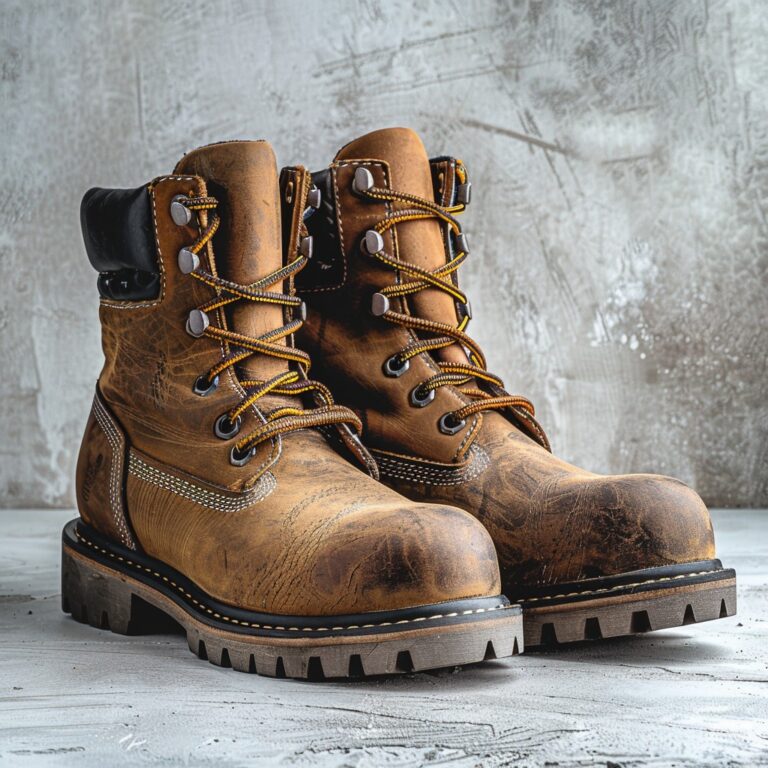
First, check the fit before you start breaking anything in
Every break-in guide skips this step, and it is the one that matters most. A boot that pinches your toes, squeezes the sides of your feet or slips at the heel is not “breaking in” — it is the wrong fit, and no amount of wear will change the length of a boot or the width of a steel cap. Australian sizing adds a trap of its own: AU men’s boot sizes match UK sizes, while US men’s sizes run about one number higher, so a US 9 is the same boot as an AU 8. If you ordered using the wrong country’s chart, send them back before you scuff them.
Half sizes deserve a second look too. Blundstone and Mongrel both note that their half sizes add width rather than length, which means a half size up will not help a boot that is too short — it will only give a roomier fit across the foot. Mongrel’s ZipSider already comes on a wide EEE last as standard, so workers with wide feet may find that boot roomy from the first wear, while narrow feet may find it loose. Cap shape matters as well: our steel cap boots guide explains the cap shapes and fit differences that decide whether a safety boot suits your foot.
Our guide to the best work boots in Australia covers the fit quirks of each major boot in detail, including which ones run wide and which ones run snug. Read the sizing notes for your exact model before you commit to breaking it in.
Why leather boots hurt at first — and which ones hurt least
Full-grain leather is stiff because it is thick, and thickness is the point: the Redback Bobcat UBBK, for example, uses oiled kip leather 2.5 to 2.7 millimetres thick, which Redback states is around 30 percent thicker than normal work boot leather. That leather protects your feet, but it needs wear to flex with your stride, and hands-on summaries note the Bobcat can feel slightly stiff at first. Expect the same from any thick-leather boot, and expect the ankle and the flex point across the toes to be the last areas to soften.
Not every leather boot starts from the same place. Blundstone says its Classics 550 has a “worn-in feel from the very first wear”, thanks to a leather lining and a relaxed fit, and the boot ships with a spare set of footbeds so the internal volume can be fine-tuned. That is a genuinely shorter break-in than a thick, unlined leather boot.
The gradual method that actually works
Forget the old tricks. Soaking boots, baking them or bending them by hand all risk the leather, the stitching and any warranty. The method that works for how to break in work boots is boring: wear the boots for short periods, then longer ones, and let your feet and the leather adapt together.
Days 1–2: around the house only
Wear the boots indoors for a couple of hours at a time, in your work socks. Walk, stand, climb stairs. You are checking for pressure points — across the toes, at the ankle bones, along the sides — while the leather starts to flex and the footbed starts to take the shape of your foot. If anything rubs raw in two hours indoors, it will be far worse after ten hours on site, and that is information, not failure.
Days 3–4: short shifts and light duties
Move to half shifts or lighter days. Keep your old boots in the car or locker as a fallback.
Day 5 onwards: full shifts
By now the leather should be flexing with your stride rather than fighting it, and the footbed should feel like it belongs to your foot. If a specific spot still hurts, that spot is telling you something: a pressure point over the toes may mean the cap shape does not suit your foot, and heel slip that has not settled may mean the size or the lacing pattern is wrong. Sore arches after a full day are different — they usually mean the footbed is not supporting you, and a removable footbed is easy to swap. Many of the boots in our best work boots in Australia guide ship with removable footbeds, including Blundstone’s XRD heel inserts and Mongrel’s OrthoTec Air footbed with anatomical arch support.
Stop and reassess if: you get blisters in the same spot three days running, your toes go numb, or the boot still feels stiff across the flex point after a week of gradual wear. Those are fit problems, not break-in problems, and pushing through them only buys you an injury and a pair of boots you resent.
Zip boots need a different break-in habit
Side-zip boots — the Steel Blue Southern Cross Zip, the Mongrel ZipSider and the Oliver AT55 hi-leg among them — break in differently because the zip is a moving part, not leather. The routine is to set the lace fit once and then use the zip for daily on and off, which is the whole point of the design. But zips and worksites do not always get along: grit and mud can clog a zip, and hands-on reviews warn never to force a stuck zip. Clean it with soap, water and a soft brush instead, and work it gently until it runs free. Forcing a zip is how teeth get damaged, and a damaged zip on a work boot is a far bigger problem than a stiff first week.
Zip boots also tend to feel different around the ankle than elastic-sided boots. An elastic side gives less ankle support than a lace-up or side-zip boot, which is worth knowing if you are moving from one style to the other: a zip boot may feel more structured and less forgiving at first, and that structure is a feature, not a break-in failure. The Oliver AT55 goes further still with a 200 millimetre hi-leg, which gives real ankle support for rough terrain but will run warmer than an ankle boot.
Hot weather, mesh boots and the easy end of break-in
Not every work boot needs a serious break-in. The FXD WB-1 Nitrolite is built like a work sneaker, with a nubuck, microfibre and mesh upper, a phylon sports-style midsole and a composite toe, and it is designed to feel light and athletic from the start. Breathable mesh panels and a Coolmax moisture-wicking lining suit hot Australian conditions far better than full leather, so if your site allows a mesh-upper boot, your break-in may be a day or two rather than a week. The trade-off is honest: a mesh and microfibre upper will not match full-grain leather for abrasion, welding spatter or muddy farm work, so choose the easy break-in only where the job allows it.
At the other end of the comfort scale, the Rossi Endura 303 is the boot for workers who stand on concrete all day: a thick air-cushion polyurethane midsole, a moulded antibacterial footbed and a nitrile rubber outsole rated to 300 degrees. A long-term farm test found the Endura strikingly lightweight, “like wearing a pair of tennis shoes”, with the leather, seams and tread holding up after a year of daily wear.
| Boot type | Typical break-in | What softens first |
|---|---|---|
| Thick full-grain leather lace-up | Longest — up to a week of gradual wear | Ankle flex and toe bend, last |
| Leather-lined elastic-sided boot | Short — often comfortable within days | Leather lining and footbed moulding |
| Side-zip safety boot | Moderate — plus zip care throughout | Lace fit settles; zip needs cleaning, not force |
| Mesh / sneaker-style safety boot | Shortest — a day or two | Foam midsole compresses to your stride |
Three mistakes that ruin a new pair
First, starting a new pair on your longest, hardest shift. Nothing about a first day on site is kind to feet, and blisters formed on day one can take a week to heal while you still have to wear the boots. Second, “breaking in” a boot that is actually the wrong size — especially a safety boot, where the cap shape and the length are fixed. Third, ignoring the footbed: a boot that feels hard underfoot may just need its removable footbed swapped or its spare set fitted, and that is a five-minute fix, not a week of suffering.
The bottom line
How to break in work boots is mostly about patience and fit, not tricks. Start indoors, build up over days, wear your real work socks, look after zips instead of forcing them, and treat persistent pain as a signal to change something — the size, the lacing, the footbed — rather than something to push through. Get the fit right first, and the leather will do the rest. If you are still choosing a pair, our best work boots in Australia guide compares the boots mentioned here side by side.
Breaking in work boots: questions, answered
How long does it take to break in work boots?
It depends on the boot. A thick full-grain leather boot can take up to a week of gradual wear before the leather flexes with your stride, while a leather-lined elastic-sided boot like Blundstone’s Classics 550 is described by the brand as having a worn-in feel from the very first wear. Mesh and sneaker-style safety boots such as the FXD WB-1 are the fastest of all, often comfortable within a day or two, because foam and mesh settle far quicker than thick leather. That range is exactly why the question of how to break in work boots has no single answer — the material sets the timetable. That range shows why how to break in work boots depends on the boot, and why how to break in work boots gradually is always the safer start.
Should new work boots hurt at first?
Mild stiffness is normal, especially in thick leather — hands-on summaries note the Redback Bobcat UBBK can feel slightly stiff at first, which is expected from leather 2.5 to 2.7 millimetres thick. Sharp pain, numb toes or blisters in the same spot three days running are not normal break-in. Those are fit problems, and pushing through them risks injury rather than a better-fitting boot. Remember that how to break in work boots safely means stopping when pain turns sharp, because how to break in work boots well means listening to your feet, not pushing through it.
What is the best way to break in leather work boots?
Wear them gradually: a couple of hours indoors first in your real work socks, then half shifts, then full shifts over several days. Let the leather flex and the footbed mould to your foot on its own schedule. Avoid soaking, baking or force-bending the boots, which can damage leather, stitching and any warranty — patience does the job that shortcuts claim to do. In short, how to break in work boots is a gradual-wear process, not a shortcut. That gradual routine is the heart of how to break in work boots without damaging the leather.
How do I break in side-zip work boots?
Set the lace fit once, then use the zip for daily on and off — that is the design’s whole point. Keep the zip clean: grit and mud can clog it, and hands-on reviews warn never to force a stuck zip, because forced teeth get damaged. Clean a gritty zip with soap, water and a soft brush and work it gently until it runs free again. That same patience is part of how to break in work boots without forcing anything that can break.
Do half sizes help if my work boots are too tight?
Not for length. Blundstone and Mongrel both note that their half sizes add width rather than length, so a half size up gives a roomier fit across the foot but will not fix a boot that is too short. Mongrel’s ZipSider already uses a wide EEE last as standard, which suits wide feet but can feel roomy on narrow feet — check whether your problem is width or length before sizing up. Getting the width right first makes how to break in work boots much easier, because a poor fit will not improve with wear.
Can I return work boots after wearing them indoors?
Indoor wear on carpet is the safe test: it lets you check the fit and feel the leather start to flex without scuffing the soles. If the fit is wrong — pinched toes, heel slip that will not settle, a cap pressing when you stand still — that is the moment to exchange them, before site wear makes them unreturnable. Always check the retailer’s own returns terms first, since they vary. That indoor trial is the safest first step in how to break in work boots for your own feet.
Related guides: Best Work Boots in Australia · Best Steel Cap Boots in Australia · Best Walking Shoes in Australia. Browse all categories on the homepage.
Affiliate disclosure: Best Aussie Wear is a participant in the Amazon Australia affiliate program. As an Amazon Associate, we earn from qualifying purchases — at no extra cost to you. Prices on Amazon change; the price you pay is the price shown on Amazon at checkout. Read our full Affiliate Disclosure.