Sunglass Lens Categories in Australia Explained: What Category 0–4 Really Means
That tiny number on the tag decides whether your sunglasses actually protect your eyes — or just look the part. Here is what categories 0 to 4 mean under the Australian standard.
Last updated: 30 October 2026In Australia, sunglass lens categories are a legal scale, not a marketing one. Every pair sold here must be tested to AS/NZS 1067 and labelled with a category from 0 to 4. Categories 0 and 1 are fashion spectacles with limited or no UV protection. Categories 2 and 3 are true sunglasses with good UV protection — and category 3 is the one CHOICE and the Cancer Council point Australians to. Category 4 is the darkest of all, made for special purposes like snow, and it must never be used for driving.
A legal scale, not a fashion claim
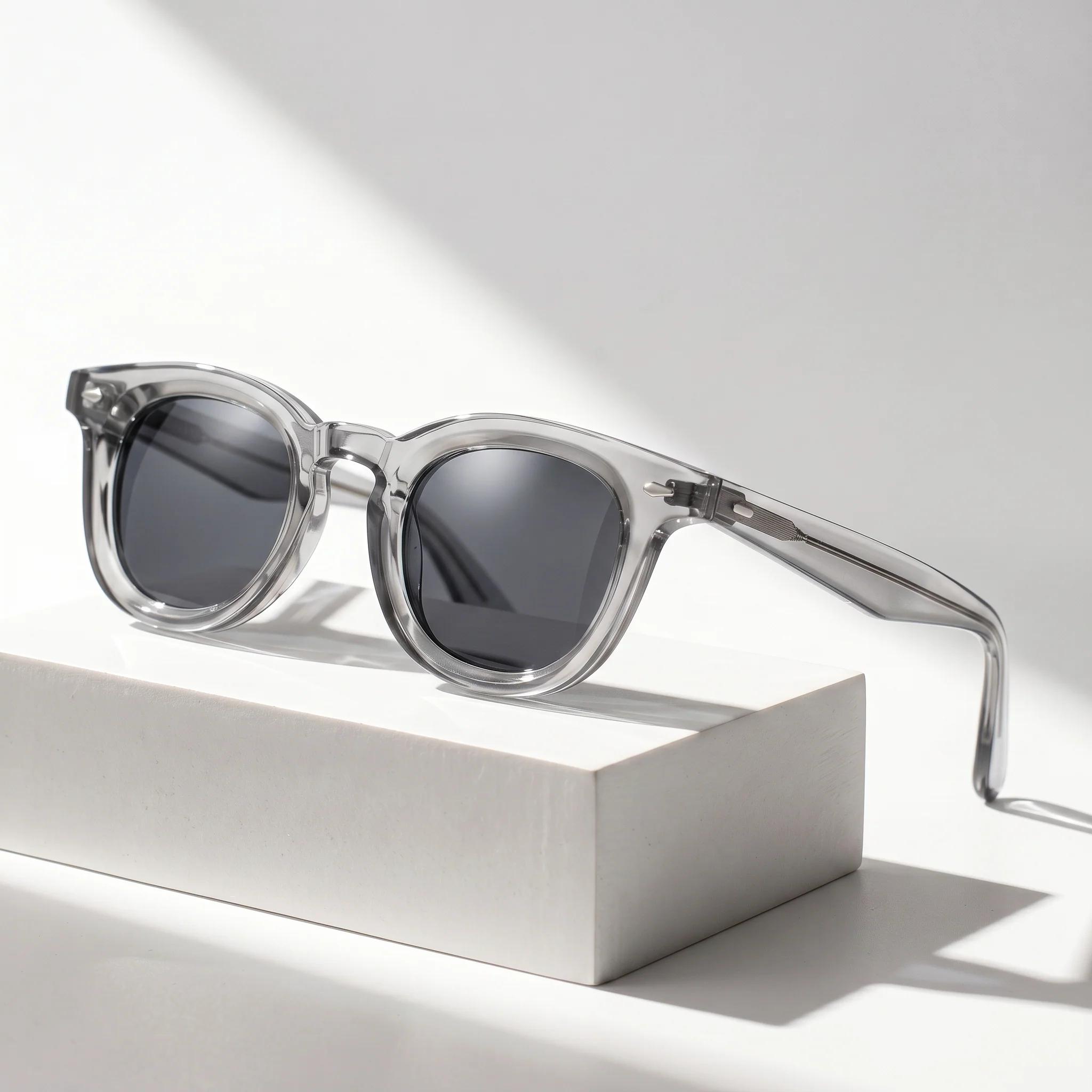
Australia is one of the few places where sunglasses are regulated as safety goods. Under the mandatory standard — the Consumer Goods (Sunglasses and Fashion Spectacles) Safety Standard 2017, built on AS/NZS 1067.1:2016 — sunglasses and fashion spectacles must be tested before they can be sold, including for protection against ultraviolet radiation across the 280–400 nanometre range. The ACCC’s category scale is how that protection is summarised for shoppers: one small number that tells you how much glare a lens cuts and where it sits on the protection ladder.
Just as importantly, every pair sold in Australia must be labelled with its lens category number and description. That label is your source of truth. Many brands sell the same frames worldwide with different lenses, and several major brands do not publish a category on their product pages at all — when we researched this site’s best sunglasses in Australia guide, the category simply wasn’t stated for some of the biggest names in eyewear. The tag never lies, even when the website stays silent.
Category by category: what 0–4 really means
The scale runs from feather-light fashion tints at one end to lenses so dark they are banned from the road at the other. Here is each step, in the ACCC’s own framing.
Category 0 — fashion spectacles
The ACCC is blunt about the bottom of the scale: category 0 lenses are “not sunglasses”. They have a very low ability to reduce sun glare and provide limited or no UV protection. Treat a category 0 pair as a fashion accessory — a look, not eye protection — whatever the colour of the tint suggests.
Category 1 — fashion spectacles
A small step up: limited sun glare reduction and some UV protection. Category 1 suits low-glare days and fashion wear, but the ACCC notes this category is not suitable for driving at night — and it is nowhere near enough for bright Australian sun.
Category 2 — sunglasses
This is where fashion spectacles end and sunglasses begin: a medium level of sun glare reduction with good UV protection. CHOICE treats category 2 as the minimum worth buying if sun protection is the point of the purchase.
Category 3 — sunglasses
High sun glare reduction and good UV protection — the strongest everyday lens on the scale. Category 3 is the category CHOICE prefers, the only category the Cancer Council fits to its own adult sunglasses, and the darkest category that remains suitable for daytime driving.
Category 4 — special purpose sunglasses
Very high glare reduction and good UV protection, built for extreme glare such as snowfields. The trade-off is absolute: the ACCC states that category 4 lenses are not suitable for driving and road use. If a pair feels dramatically darker than ordinary sunglasses, check the label before you get behind the wheel.
| Category | Light transmission feel | Best use | Driving suitability |
|---|---|---|---|
| 0 | Barely dims the light — very low glare reduction | Fashion accessory only | Fashion wear only — not sunglasses |
| 1 | Lightly shaded — limited glare reduction | Low-glare days, fashion with some UV cover | Not suitable for night driving |
| 2 | Comfortably shaded — medium glare reduction | Everyday sun protection | Daytime wear — CHOICE’s minimum |
| 3 | Strongly shaded — high glare reduction | Bright Aussie sun, beach days, long drives | Daytime driving — darkest driving-suitable category |
| 4 | Very dark — very high glare reduction | Snow and extreme glare | Never for driving or road use |
Glare-reduction wording follows the ACCC’s published category descriptions under AS/NZS 1067. The ACCC summary gives no separate driving rating for category 0; category 1 is specifically flagged as unsuitable for night driving.
“Look for a lens category of at least 2 or preferably 3.”
CHOICE — Sunglasses Buying GuideWhy category 3 is the Australian sweet spot
Category 3 keeps winning the expert vote for a simple reason: it is the highest glare reduction that remains suitable for daytime driving, while still carrying the “good UV protection” the standard requires of sunglasses in categories 2, 3 and 4. CHOICE advises a lens category of at least 2 and preferably 3, and the Cancer Council fits category 3 polarised lenses to every pair in its own adult range — a range independently tested by accredited laboratories such as ORLAB. When the organisation that campaigns against skin cancer chooses one category for its own shelves, that tells you where the balance sits.
Fit is the other half of protection. The Cancer Council recommends close-fitting, wraparound sunglasses that meet the Australian Standard, because a wraparound style guards against the 40% of UV that reaches the eye as peripheral light from the sides. Wear a broad-brimmed hat as well and, the Cancer Council advises, the combination can reduce UV radiation exposure to the eyes by up to 98%. Our guide to the best sun hats in Australia covers the other half of that equation.
Polarised vs tinted: comfort is not protection
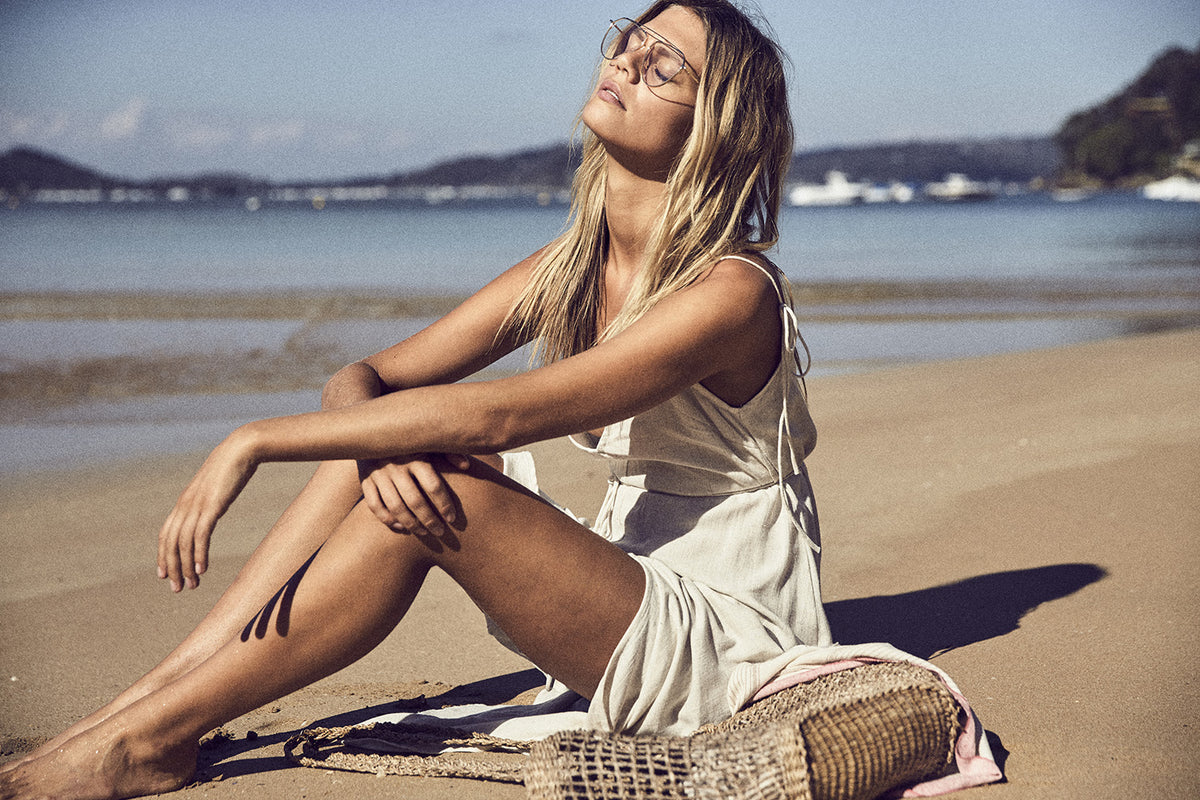
Polarisation is the most misunderstood word in sunglasses. A polarised lens carries a filter that targets reflected glare — the horizontal light bouncing off water, roads, snow and wet sand. That is why fishers can suddenly see into the water, why bright or wet roads feel calmer to drive on, and why snow glare softens. Brands compete hard on the claim: Ray-Ban says its polarised lenses block more than 99% of reflected light. As a comfort and visibility feature, polarisation genuinely earns its keep.
But glare comfort and UV protection are separate properties of a lens. A non-polarised category 3 lens still delivers the “good UV protection” the standard describes, and a polarised lens is not automatically a higher category than a non-polarised one. The reverse trap matters even more: a dark tint is not protection either. The Cancer Council stresses that lens darkness and colour do not indicate the level of UV protection, and that excellent UV protection does not need to be expensive — SafeWork NSW makes the same point about low-cost, standard-compliant sunglasses. Judge a pair by its category label first; then decide whether polarisation is worth it for the way you will actually use it.
UV400 and EPF: decoding the other stickers
Alongside the category, you may see “UV 400” on the sticker. The Cancer Council notes that sunglasses may also be labelled UV 400 and block at least 95% of UV between 190 and 400 nanometres — a slightly wider band than the 280–400 nanometre range the Australian standard tests for. Cancer Council SA’s SunSmart fact sheet adds two marks worth looking for: an Eye Protection Factor (EPF) of 9 or 10, or that same UV 400 label.
None of these extra marks replaces the category number. Think of it as a two-part check: the category confirms the lens sits inside the mandatory standard and tells you how much glare it cuts, while UV 400 or an EPF 9–10 marking is further confirmation of ultraviolet blocking. A pair that shows neither a category nor a UV mark has given you no evidence of protection at all — walk away.
How to check the pair you already own
Start with the label. Because every pair sold in Australia must be labelled with its lens category number and description, the answer is printed somewhere: the swing tag, the lens sticker, the box it came in, or the product page you ordered from. Some Australian brands publish the category proudly online — Le Specs, for instance, lists “UV Protection: category 3” on its product pages — but for several major brands the category simply isn’t published on the web page, which is exactly why the mandatory label exists. The physical tag is the source of truth.
Then check the fit while you are wearing them. If daylight floods in around the edges of the frames, peripheral UV gets in too — the Cancer Council’s wraparound advice exists precisely because so much eye exposure arrives from the side. And if your current pair turns out to be category 0 or 1, don’t bin it: demote it to fashion duty and get a labelled category 2 or 3 for real sun. Our best sunglasses in Australia guide rounds up pairs for every budget, with the category question asked of every pick.
The bottom line
Read the little number first. Category 3 for bright Australian days and driving, category 2 as the sensible minimum, category 4 for snowfields and never on the road — and whatever you choose, make sure the label is actually there. Once your eyes are sorted, the rest of the summer kit is on this site too: our best summer dresses in Australia guide rounds up breathable picks made for exactly the same harsh sun.
Sunglass lens category questions, answered
What do sunglass lens categories 0 to 4 mean in Australia?
They are the ACCC’s scale under the mandatory AS/NZS 1067 standard, running from least to most glare reduction. Categories 0 and 1 are fashion spectacles with limited or no UV protection, categories 2 and 3 are sunglasses with good UV protection, and category 4 is a special purpose lens with very high glare reduction. That is the starting point for understanding sunglass lens categories australia before you compare pairs.
Which lens category is best for Australian sun?
Category 3 is the widely recommended default: CHOICE advises a lens category of at least 2 or preferably 3, and the Cancer Council fits category 3 polarised lenses to all of its own adult sunglasses. It gives a high level of glare reduction while remaining suitable for daytime driving. For most shoppers, sunglass lens categories australia come down to choosing category 3 for bright days.
Can I drive while wearing category 4 sunglasses?
No. The ACCC states that category 4 lenses are not suitable for driving and road use, because they are made for special purposes such as extreme glare and snow. Category 1 also carries a warning of its own: it is not suitable for driving at night. That driving rule is one of the clearest reasons to check sunglass lens categories australia before a long trip.
Do polarised sunglasses protect better against UV?
Not by themselves. Polarisation cuts reflected glare off surfaces like water, roads and snow, but it is separate from UV filtration and from the lens category — a non-polarised category 3 lens still provides good UV protection under the standard. The Cancer Council also notes that lens darkness and colour do not indicate the level of UV protection. Polarisation aside, sunglass lens categories australia still tell you the level of glare reduction on offer.
What does UV 400 mean on a pair of sunglasses?
According to the Cancer Council, sunglasses labelled UV 400 block at least 95% of UV between 190 and 400 nanometres. Cancer Council SA’s SunSmart fact sheet also suggests looking for a marked Eye Protection Factor (EPF) of 9 or 10. These marks support the category label — they don’t replace it. UV 400 and EPF marks sit alongside sunglass lens categories australia, not in place of them.
How can I find the category of sunglasses I already own?
Every pair sold in Australia must be labelled with its lens category number and description, so check the swing tag, lens sticker, box or the product page you ordered from. Some brands publish the category online, but many don’t — the physical label is the reliable source. Once you know where to look, sunglass lens categories australia are easy to check on any new pair.
Related guides: Best Sunglasses in Australia · Best Sun Hats in Australia · Best Summer Dresses in Australia. Browse all categories on the homepage.
Affiliate disclosure: Best Aussie Wear is a participant in the Amazon Australia affiliate program. As an Amazon Associate, we earn from qualifying purchases — at no extra cost to you. Prices on Amazon change; the price you pay is the price shown on Amazon at checkout. Read our full Affiliate Disclosure.