Steel Cap vs Composite Toe Boots: Which Safety Toe Do You Need in Australia?
Two cap materials, one Australian standard, and a shelf full of confident claims. Here is what actually separates a steel cap from a composite toe — protection, weight, temperature, metal detectors and site rules — so you can match the cap to your job instead of the marketing.
Last updated: 30 October 2026The short answer
Choose steel if you want the slimmest toe box, the most proven cap material and usually the lower price — and your work never takes you through a metal detector. Choose composite if weight matters across long shifts, you work in cold conditions, or you need a metal-free boot for screening at airports and secure sites (FIFO crews, corrections, logistics hubs).
Under AS 2210.3, both caps must pass the same impact and compression tests — this is a comfort, weight and site-rules decision, not a protection gap. Once you know which cap you need, our steel cap boots guide ranks the certified steel picks, and our work boots guide compares steel and composite models side by side.
How each cap works
The steel cap
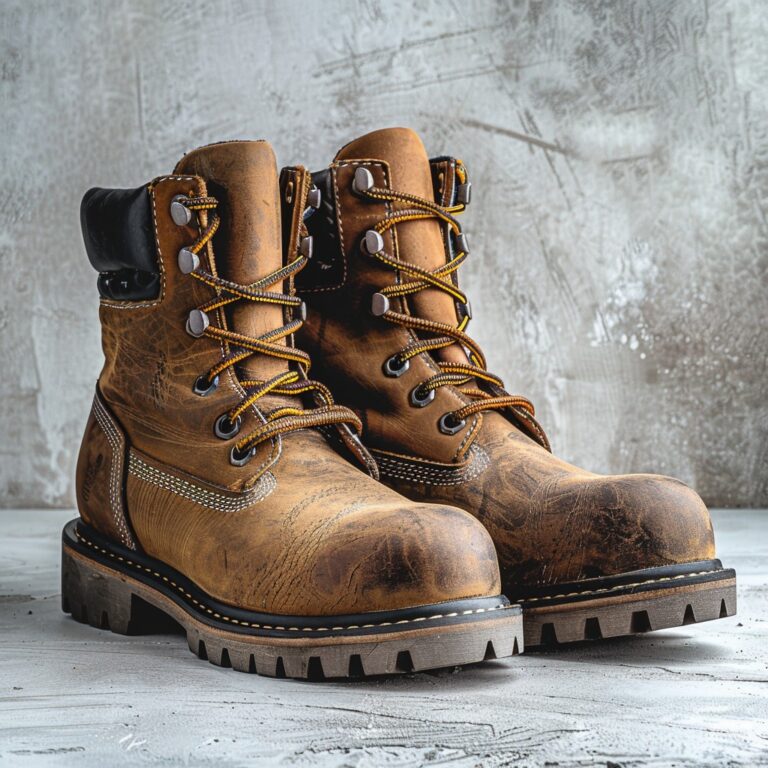
A steel cap is a shell of hardened steel moulded into the toe of the boot. Because steel is so strong in a thin layer, the shell can be made thin — which is why steel-toe boots generally have the slimmer, lower-profile toe box. Blundstone, which uses steel caps across its safety range, puts the case for steel plainly: it says steel “offers the best protection in safety toe cap material, providing the highest level of resistance to impacts, punctures, cuts and rolling side compression,” with its broad Type 1 caps tested to a 200-joule impact.
The composite cap
A composite cap does the same job with engineered non-metallic materials instead of steel — Oliver’s NATUREform cap, used in its AT45 and AT55 ranges, is one Australian example. To reach the same certified strength, a composite cap has to be thicker than a steel shell, so composite boots tend to run a bulkier toe box. In return, the cap contains no metal at all: Oliver describes the AT45’s hi-impact composite cap as fully non-metallic.
AS 2210.3 in plain English
The first thing to understand about the Australian standard is that it does not care what your toe cap is made of. AS 2210.3:2019 sets test results, not materials: at Class 1, a certified cap — steel or composite — must withstand a 200-joule impact and 15 kN of compression. KingGee, for example, certifies its safety range to AS 2210.3:2019 regardless of which cap material a model uses. A certified composite cap carries the same certified protection as a certified steel cap.
Impact test: 200 joules. Compression test: 15 kN. Material: not specified — the cap passes or fails on performance, whether it is steel, composite or alloy.
The standard also explains a flag we raise in our steel cap boots guide: some imported boots, such as the CAT Second Shift, are certified only to the US ASTM F2413-18 standard, with no AS 2210.3 certification. Many Australian sites require AS 2210.3, so an ASTM-only boot can be refused at the gate — check your site policy before buying any boot whose label does not show the Australian standard.
Weight and all-day comfort
This is composite’s strongest argument. Oliver markets its AT45 composite cap as more than 40% lighter than traditional steel toe caps while still exceeding AS/NZS 2210.3, and an independent comparison by iNeedWorkwear puts composite caps at typically 30–50% lighter than a steel cap of the same size. The saving is only at the toe, but it is repeated with every step of a long shift — one reason sneaker-style safety boots like the FXD WB-1 pair a composite cap with a lightweight sports midsole.
The trade-off is shape, not safety. Because the composite shell is thicker, the toe box is bulkier, and workers with narrow feet or a preference for a low-profile boot often find steel more comfortable. As retailer guides on popular steel models like the Mongrel ZipSider note, the steel toe is heavier than composite — the question is whether you notice grams at the toe more than you notice extra bulk around it.
Heat, cold and electricity
Steel conducts temperature straight to your foot. In a cold store or a southern winter, a steel cap can feel like a cold plate over your toes; composite does not conduct, which is why comparison guides consistently nominate it as the pick for cold stores and winter work.
Heat at work, though, is mostly an outsole question rather than a toe-cap question. For foundry and hot-surface work, the deciding spec is the sole: rubber and nitrile outsoles on Australian safety boots are commonly rated to 300°C, while TPU outsoles are typically rated around 130°C. Check the sole rating for hot work, whichever cap you choose.
Electricity is the most misunderstood point of all. What protects you is the boot’s EH (electrical hazard) rating, which is separate from toe-cap material. A steel-toe boot can absolutely be EH rated — Blundstone’s #997 is a steel cap boot that is also certified to the ASTM electrical hazard clause — and a composite boot is not automatically EH rated either. Related trap: “anti-static” is not the same thing as EH rated, and the two should never be treated as interchangeable when you are checking a spec sheet.

Metal detectors and site rules
A steel cap will set off a security archway every single time. A composite cap will not — it contains no metal — which is why composite is the standard answer for airports, prisons and secure facilities, and for FIFO workers who clear airport-style screening on every swing. FXD markets its composite-toe WB-1 as “airport friendly” for exactly this reason.
One caution: the cap is not the only metal in a boot. Some steel-toe models also run a steel shank in the sole (the Blundstone #997 is one), so if screening matters to you, choose a boot that is non-metallic throughout — Oliver’s AT45 datasheet, for instance, specifies a fully non-metallic build — rather than assuming any composite-toe boot is detector-proof.
Durability, damage and cost
Whichever cap you wear, treat it as a single-event device: a cap is certified for a 200-joule impact, not a career of them, and after a serious hit the boot should be replaced either way. The difference is how damage shows itself. Steel dents visibly, so you can see that the cap has taken its hit. Composite damage can be internal and invisible — the boot can look fine while the cap is compromised — which argues for a lower replacement threshold after any heavy impact.
On price, steel is usually the cheaper option and composite typically costs more for equivalent certification. If your job has no screening, no cold work and no weight problem, steel’s lower price and slimmer profile make it the sensible default; composite earns its premium when one of those three conditions applies. And if your work does not mandate a certified safety toe at all, you may not need either — our walking shoes guide covers the comfort-first options for long days on your feet without a cap.
Steel cap vs composite toe, property by property
| Property | Steel Cap | Composite Toe |
|---|---|---|
| Certified protection | 200J impact / 15 kN compression under AS 2210.3 Class 1 | Identical — 200J impact / 15 kN compression under AS 2210.3 Class 1 |
| Weight | Heavier cap | Typically 30–50% lighter than a same-size steel cap (iNeedWorkwear); Oliver markets its cap as 40%+ lighter |
| Toe box profile | Slimmer — thinner shell | Bulkier — thicker shell for the same strength |
| Temperature | Conducts heat and cold to the foot | Does not conduct — the cold-store and winter pick |
| Metal detectors | Sets off security archways | Metal-free cap — screening friendly (check the whole boot is non-metallic) |
| Electrical work | Depends on the boot’s EH rating, not the cap — steel boots can be EH rated | Same — EH rating is a separate certification; anti-static is not EH |
| After a big impact | Dents visibly; replace the boot | Damage can be hidden internally; replace the boot |
| Typical price | Usually the cheaper option | Typically costs more |
Ready to shop with the cap decided? Start with our work boots guide for the full ranked list across both cap types.
Safety toe questions, answered
Is a composite toe as safe as a steel cap?
Yes — under AS 2210.3:2019, both materials must pass the same Class 1 tests: a 200-joule impact and 15 kN of compression. The standard specifies test results, not cap material, so a certified composite cap carries the same certified protection as a certified steel cap. What differs is weight, profile, temperature behaviour and metal content — not the protection rating. In short, the steel cap vs composite toe choice is about comfort and site rules, not certified protection.
Are composite toe boots lighter than steel cap boots?
Yes. An independent comparison by iNeedWorkwear puts composite caps at typically 30–50% lighter than a steel cap of the same size, and Oliver markets its hi-impact composite cap as more than 40% lighter than traditional steel toe caps while still exceeding AS/NZS 2210.3. The trade-off is a bulkier toe box, because a composite shell must be thicker than steel to reach the same strength. Either way, the steel cap vs composite toe decision should weigh that weight saving against the bulkier toe box.
Do composite toe boots set off metal detectors?
No — a composite cap contains no metal, which is why composite is the usual choice for airports, prisons, secure facilities and FIFO workers who clear screening every swing. One caution: check the whole boot, not just the cap. Some boots add a steel shank in the sole, so if screening matters, pick a model specified as fully non-metallic, like Oliver’s AT45 range. For screening, the steel cap vs composite toe choice is straightforward: composite keeps you metal-free.
Which safety toe is better for electrical work?
Neither, by itself — protection from electrical hazards comes from the boot’s EH (electrical hazard) rating, which is a separate certification from toe-cap material. A steel cap boot can be EH rated (Blundstone’s #997 steel boot carries an ASTM EH rating), and a composite boot is not automatically EH rated. Also note that “anti-static” is not the same as EH rated; never treat the two as interchangeable. So in the steel cap vs composite toe debate, always check the EH rating separately from the cap material.
Which toe cap is better for cold work?
Composite. Steel conducts heat and cold straight to your foot, so a steel cap can feel like a cold plate in a cold store or winter conditions. Composite does not conduct temperature, which is why it is consistently recommended for cold stores and winter work. For hot work, check the outsole instead — rubber and nitrile soles are commonly rated to 300°C, TPU soles to around 130°C. That temperature difference is one of the clearest steel cap vs composite toe trade-offs for cold work.
Does my safety boot need AS 2210.3 certification in Australia?
On many Australian sites, yes — AS 2210.3 is the standard site policies ask for, and a boot without it can be refused. Some imported boots are certified only to the US ASTM F2413-18 standard; the CAT Second Shift is one example with no AS 2210.3 certification. Always check the boot’s label for AS 2210.3:2019 before buying, and check your site policy if you are unsure. Whatever you choose, the steel cap vs composite toe decision should start with checking for AS 2210.3 certification.
Related guides: Best Steel Cap Boots in Australia · Best Work Boots in Australia · Best Walking Shoes in Australia. Browse all categories on the homepage.
Affiliate disclosure: Best Aussie Wear is a participant in the Amazon Australia affiliate program. As an Amazon Associate, we earn from qualifying purchases — at no extra cost to you. Prices on Amazon change; the price you pay is the price shown on Amazon at checkout. Read our full Affiliate Disclosure.